
Why Concrete Cracks in the East Bay (and How to Prevent It)
Here is the short answer: most concrete cracking in the East Bay traces back to what is happening under the slab, not to bad concrete on top. The mix matters, but soil movement and base prep decide whether a driveway or patio stays sound for decades or splits by its second summer. Our ground is unusually active, and concrete poured without respect for that ground cracks on schedule.
This guide walks through the real local causes, from expansive hill clay to settling bay fill to the Hayward Fault, then shows you how to tell a harmless hairline from a crack that needs attention, and what proper prevention actually looks like. If you already have cracking you want a straight opinion on, call (510) 822-7170 for a free on-site look.
Get ahead of the damage with our pre-rain concrete sealing checklist.
Start With the Soil, Not the Slab
The East Bay is really two very different ground conditions stitched together, and each one cracks concrete in its own way. Knowing which one you are on tells you most of what you need to know about why your slab is moving.
Expansive ‘adobe’ clay in the hills
Up through the Berkeley, Oakland, and Piedmont hills, the soil is expansive ‘adobe’ clay. It soaks up water and swells in the wet winter months, then dries out and shrinks through the summer. That seasonal swell-and-shrink cycle pushes up on a slab from below in winter and drops away from it in summer, prying concrete apart over time. It is the single most common reason a hillside driveway or patio develops long, wandering cracks that keep widening year after year.
Bay fill and Young Bay Mud on the flats
Down on the flats and along the shoreline, the story flips. Alameda Island, Emeryville, the estuary, and the San Leandro and San Lorenzo shoreline sit largely on bay fill over Young Bay Mud, soft ground that compresses and settles slowly under load. Slabs on poorly compacted fill sink unevenly, and portions of this ground even liquefied in the 1989 Loma Prieta quake. Instead of the swelling you see in the hills, flatland concrete tends to crack from settlement, one section dropping lower than the rest.
Planning a concrete project in Alameda or the East Bay? Get a free, no-obligation on-site estimate and a written flat-rate price.
The Hayward Fault and Seismic Movement
The Hayward Fault runs the length of the East Bay, straight through Berkeley, Oakland, San Leandro, and Hayward. Beyond the risk of a large quake, the fault creeps slowly year-round, and that ground movement transfers into everything built on it, including flatwork and footings.
You cannot engineer a patio to shrug off a major earthquake, and no honest contractor will promise that. What good local work does is build in the reinforcement and control joints that let concrete flex and move with minor shifts instead of shattering. A slab poured with rebar, fiber mesh, and correctly placed joints handles seismic nudging far better than a plain, thin pour. This is doubly true for structural work like foundations, where reinforcement is not optional.
Bad Base Prep, Missing Joints, and Tree Roots
Not every crack is the soil's fault. Plenty come from shortcuts in how the concrete was installed, and these are the ones that were genuinely preventable.
Poor sub-base compaction
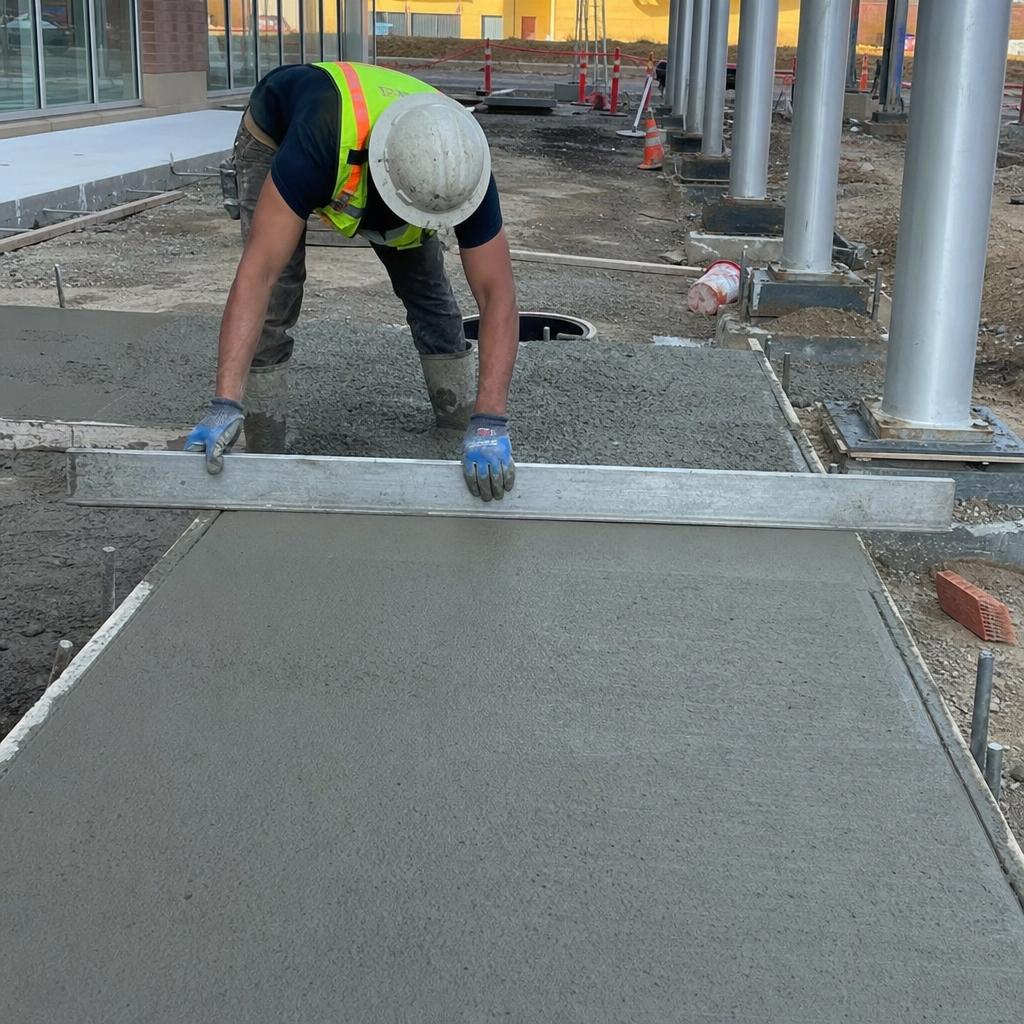
Concrete is only as stable as what it sits on. When a crew skips proper excavation and compaction, or pours over loose soil and debris to hit a lower bid, the base settles unevenly and the slab cracks to match. On our clay and fill, skipping compaction is the fastest way to a cracked driveway.
Missing or badly placed control joints
Concrete shrinks as it cures, and it will crack somewhere as it does. Control joints are the intentional grooves that tell it where to crack, in a straight, hidden line instead of a random one across the surface. Leave them out, space them too far apart, or cut them too shallow, and the slab decides for itself, usually with an ugly diagonal crack.
Tree roots
The East Bay's mature trees are beautiful and hard on flatwork. Roots from a nearby tree grow under a sidewalk or driveway and lift it, cracking the slab and creating trip-hazard lips where sections no longer line up. Sidewalks and walkways near established trees are the usual victims.
Hairline vs. Structural: Which Cracks Actually Matter
Not all cracks are a problem. Some are cosmetic and expected; others are a signal that something below has moved. Here is how the common types sort out.
| Crack Type | Likely Cause | What to Do |
|---|---|---|
| Hairline | Normal curing and surface shrinkage | Cosmetic. Monitor and seal; no action usually needed |
| Shrinkage | Fast drying, poor curing, or joints too far apart | Mostly cosmetic. Seal to keep water out; watch for widening |
| Settlement | Sub-base or bay fill compressing unevenly | Have it assessed. May need leveling or a repour with proper base |
| Heaving | Expansive clay swelling, or tree roots lifting the slab | Address the cause first, then repair or replace the slab |
| Structural | Base failure, seismic movement, or heavy overload | Get a professional look soon. Often needs replacement |
A useful rule of thumb: fine hairline and shrinkage cracks that stay thin are cosmetic. Cracks that are widening, wide enough to fit a coin, running diagonally across a slab, or leaving one side higher than the other point to soil movement and are worth a professional opinion. Our fuller signs you need concrete repair guide breaks these warning signs down in more detail.
How to Prevent Cracking in the First Place
You cannot stop the ground from moving, but you can pour concrete that takes the movement and stays sound. Every durable East Bay slab shares the same fundamentals, and most of them happen before any concrete arrives.
- A compacted, engineered base. Proper excavation and a mechanically compacted sub-base give the slab firm, even support. This is the step budget crews cut and the one that matters most on clay and fill.
- A 4,000 PSI mix. A stronger mix resists cracking and holds up to our loads and soils better than a bare-minimum pour.
- Rebar and fiber mesh. Steel reinforcement holds the slab together and keeps small cracks from spreading, which is exactly what you want in seismic, shifting ground.
- Correctly spaced control joints. Joints cut at the right spacing and depth give shrinkage a place to go, so the slab cracks where you planned instead of where you did not.
- Proper drainage. Grading the slab to shed water keeps moisture out of the base, which is what feeds settlement and clay swelling. Standing water is a slow-motion crack.
- Sealing. A quality sealer, refreshed every few years, keeps salt air and moisture from working into the surface, a real concern near the shoreline.
Done together on a new pour, these are the difference between concrete that lasts 30 years and concrete that cracks in three. It is also why a proper base is the cheapest driveway you will ever own over its full life. See how we build it into a new concrete driveway installation, or call (510) 822-7170 to talk through your project.
Repair or Replace? How to Decide
If your concrete is already cracked, the honest answer to what to do depends on whether the base beneath it is still sound. When the slab is structurally solid and the cracking is surface-level, repair and resurfacing are far cheaper than replacement and can add years of life. Sealing a crack, correcting drainage, or resurfacing a spalled surface breaks the cycle before water can undermine the base.
When the base itself has failed, though, patching only buys a little time. Widespread deep cracking, crumbling, or major settlement means the ground below is no longer supporting the slab, and the lasting fix is a repour over a properly compacted, reinforced base. On expansive clay or bay fill, replacing a failed slab without fixing the base underneath just resets the same clock.
The right call is rarely a guess. A quick on-site look tells you whether you are dealing with a cosmetic crack, a repairable one, or a base that needs rebuilding. Alameda Elite Concrete Solutions will give you a straight recommendation, not just the pricier one. Call (510) 822-7170, Monday through Sunday, 7am to 6pm, for a free assessment.
Questions, Answered
Are all cracks in my concrete a sign of a problem?
No. Fine hairline and shrinkage cracks are a normal part of concrete curing and are usually cosmetic. The ones to watch are cracks that widen, lengthen, run diagonally, or leave one side higher than the other. In the East Bay, those patterns often point to expansive clay or settling bay fill moving the slab from below, which is worth a professional look.
Why does East Bay soil crack concrete so often?
The region has two demanding soil types. In the Berkeley, Oakland, and Piedmont hills, expansive adobe clay swells in winter and shrinks in summer, prying slabs apart. On the flats and shoreline, bay fill over Young Bay Mud settles and can liquefy, dropping slabs unevenly. The Hayward Fault adds seismic movement. All three reward proper base prep, reinforcement, and control joints.
Can you prevent concrete from cracking completely?
You cannot guarantee zero cracks, because concrete shrinks as it cures and the ground here moves. What proper work does is control it: a compacted engineered base, a 4,000 PSI mix, rebar and fiber mesh, correctly spaced control joints, good drainage, and sealing direct any cracking into planned joints and keep it cosmetic rather than structural. That is the difference between a slab that lasts decades and one that fails early.
Need Help in Alameda?
Alameda Elite Concrete Solutions provides fast, same-day concrete across Alameda, CA and the surrounding area — flat-rate pricing, licensed and insured, with 24/7 emergency service. Landed on this article from a search? Head back to our homepage to see everything we do, or reach out now.