
Concrete Slab Installation in Alameda, CA | Local Commercial Contractor
Expert concrete slab installation, level and reinforced, for garages, ADUs, sheds, and commercial floors across Alameda, backed by a free estimate.
A flat, level, well-reinforced slab is the surface everything else is built on, whether that is a car, a workbench, a forklift, or the finished floor of a new ADU. At Alameda Elite Concrete Solutions we pour the full range of flatwork slabs: garage slabs, ADU and granny-flat slabs, shed and outbuilding pads, equipment and generator pads, interior floor slabs, and heavy-duty commercial floor slabs for warehouses and shops. Every slab we place is formed to true grade, reinforced with rebar or welded wire mesh sized to the load, and poured with a minimum 4,000 PSI mix so it carries weight without cracking, heaving, or settling. We work for homeowners, builders, and businesses throughout Alameda and the wider East Bay. Call (510) 822-7170 for a free on-site estimate and a straight, flat-rate quote before anyone breaks ground. We serve Alameda, Oakland, Hayward, San Leandro, and the surrounding communities, residential and commercial alike.
For business and multifamily projects, see our commercial concrete hub. Replacing an old slab? We handle removal too.
Why We're the Right Choice for Concrete Slabs in Alameda
A slab looks simple from the top, but the difference between one that stays flat for decades and one that cracks in its first summer is all in the base, the steel, and the pour. Here is what you get when you hire us.
- Licensed & Insured: fully licensed and insured, working to code with permits and inspections handled, and every slab backed by a workmanship guarantee.
- Level, Laser-Screeded Flatwork: we form to grade and, on larger slabs, laser-screed the surface flat and true, so your floor drains where it should and finishes level end to end.
- Quality Materials: a minimum 4,000 PSI mix reinforced with #4 rebar and 6x6 welded wire mesh sized to the load, never a thin, under-reinforced pour that fails early.
- Residential & Commercial: from a backyard shed pad or garage slab to a full warehouse floor, we scale the same standards up or down.
- Free On-Site Estimates: we walk the site, check the subgrade and access, and hand you a clear, flat-rate number with no pressure.
Our Concrete Slab Installation Process
A slab is only as good as the ground beneath it and the discipline behind every step that follows. Here is how we control the whole build, from the first look at the subgrade to full-strength concrete.
Site Preparation & Assessment
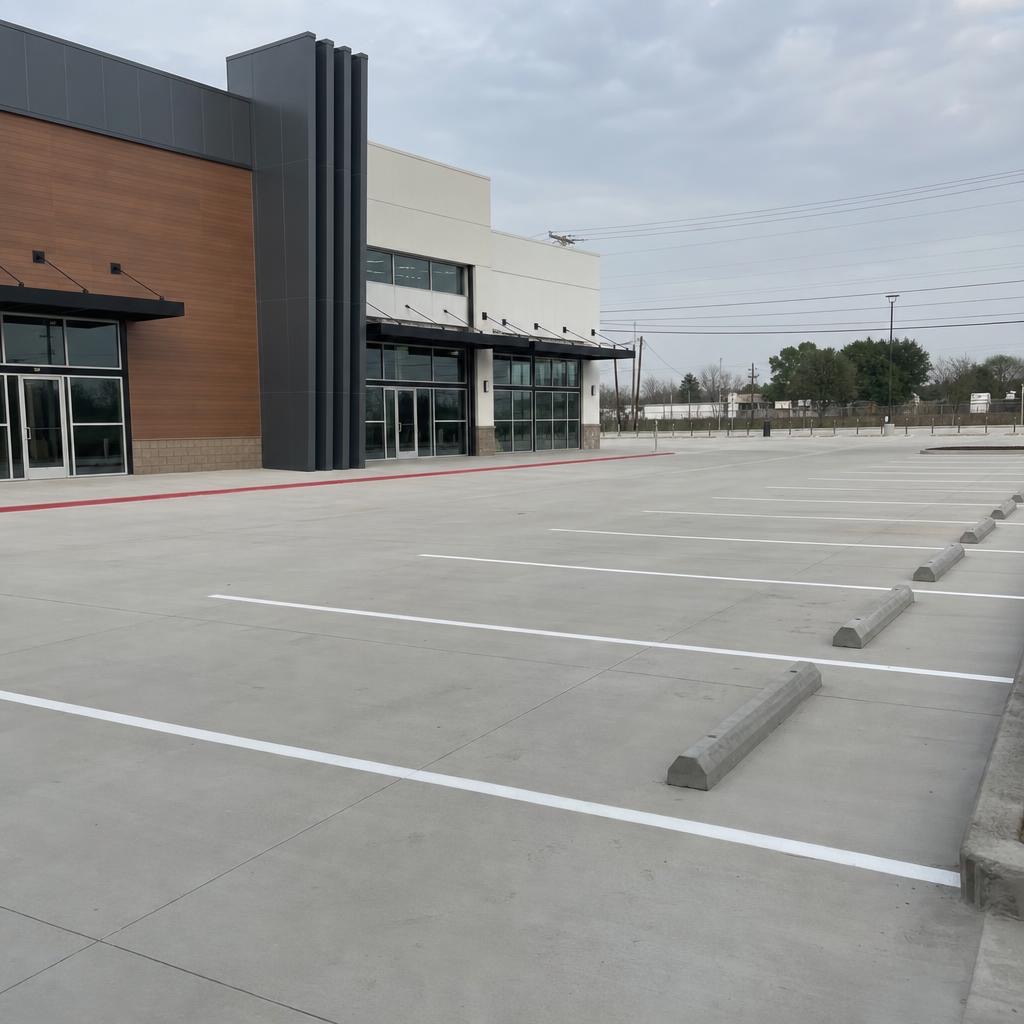
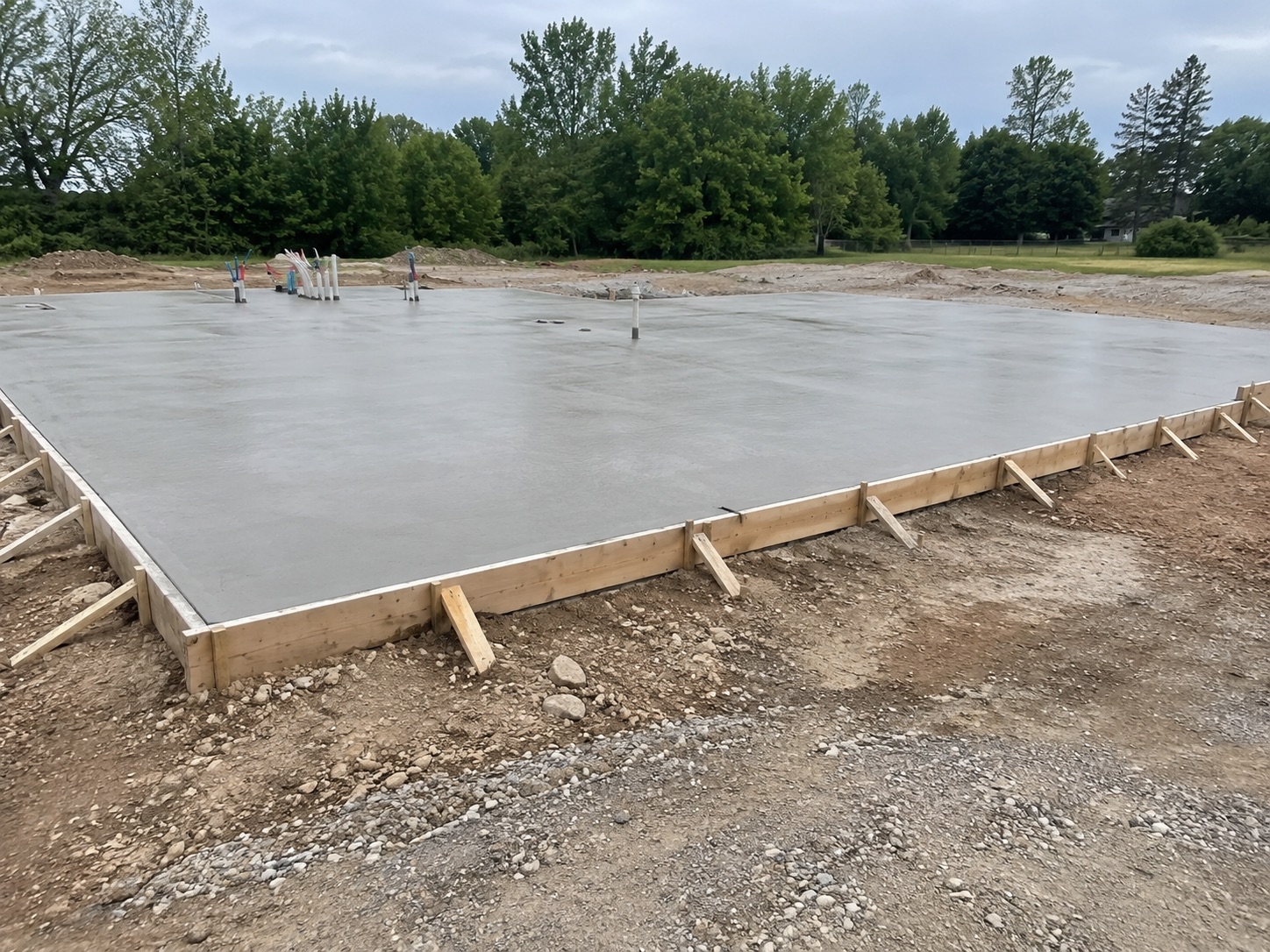
We start by clearing the area and evaluating the ground, not by pouring concrete. We check the subgrade and the soil to see what we are building on, then excavate to the correct depth and lines and compact a Class 2 aggregate base course to give the slab a firm, uniform platform. On Alameda's Bay fill and shoreline flats, the native soil is often too loose to trust, so we over-excavate and re-compact the subgrade rather than setting a slab on ground that will settle unevenly later. From there we form the perimeter to grade so the concrete cures to the exact dimensions and slope the job calls for. Getting this stage right is the single biggest factor in whether a slab stays flat and crack-free for the long haul.
Base, Reinforcement & Vapor Barrier
With the base compacted and the forms set, we build in the steel and moisture protection. Under conditioned slabs, such as an ADU floor or an interior slab, we lay a 10 to 15 mil vapor barrier over the base to keep ground moisture from wicking up through the concrete into finished floors, a detail that matters a great deal on our damp, low-lying lots near the shoreline. Then we place reinforcement sized to the load: a #4 rebar grid on chairs, 6x6 W2.9 welded wire mesh, or both, depending on how much weight the slab will carry. Where the slab supports a structure or wall, we set anchor bolts to the plans. Everything is placed to meet code and staged for inspection before any concrete is called, so the pour proceeds on an approved, engineered assembly rather than a rushed one. Call (510) 822-7170 to talk through what your slab needs to carry.
Concrete Slab Pouring
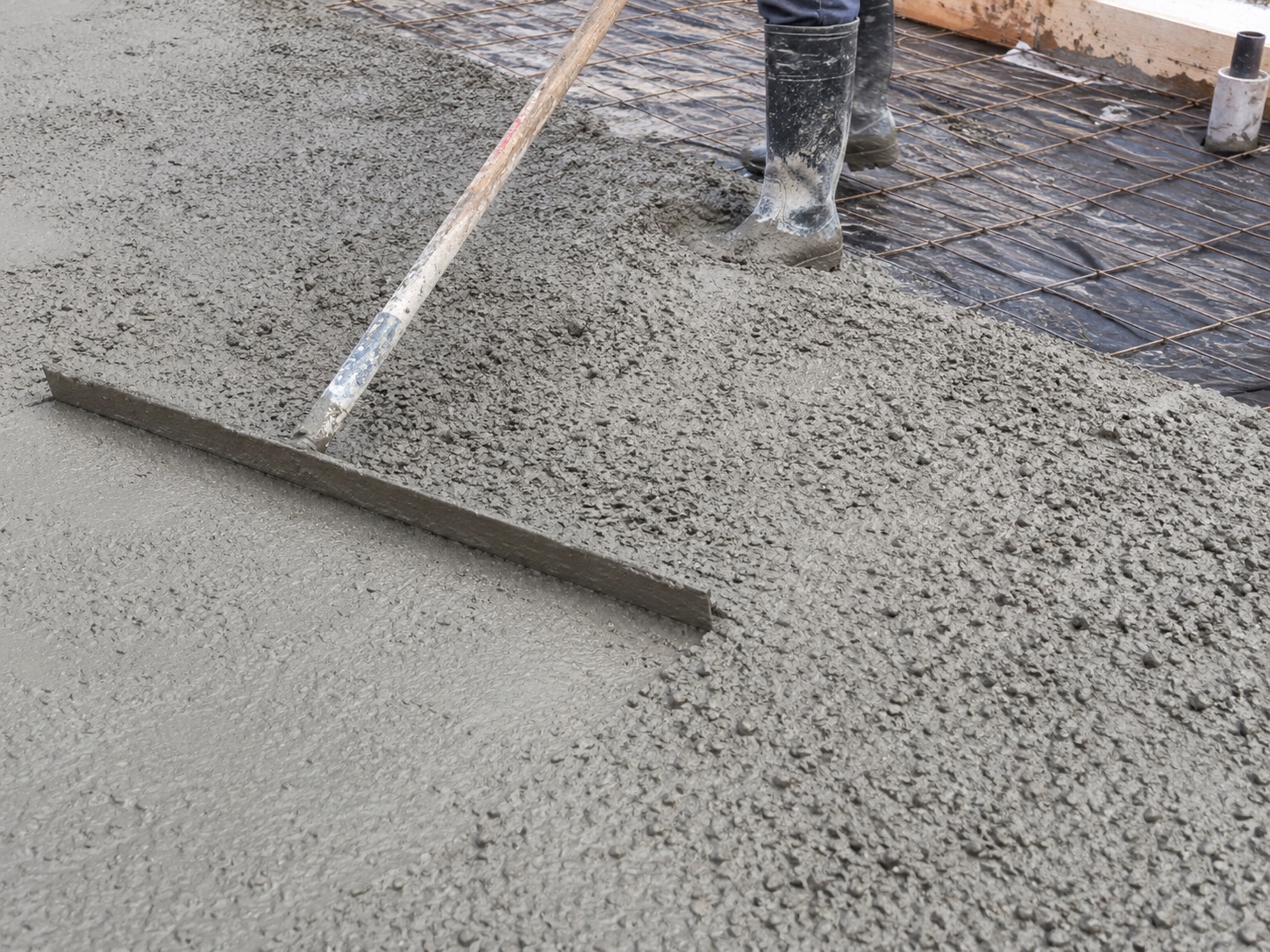
On pour day we place a minimum 4,000 PSI ready-mix that meets ASTM C94, monitoring the slump as it comes off the truck so the concrete going into the forms is the concrete the job specified. We screed the surface to grade, then consolidate the concrete with mechanical vibration so there are no voids or honeycombing around the steel and the slab is dense all the way through. On larger slabs we laser-screed the surface for flatness, holding a true, level plane across the whole footprint that a hand screed simply cannot match on a commercial floor. This is where a level, professional slab is won or lost.
Finishing & Curing
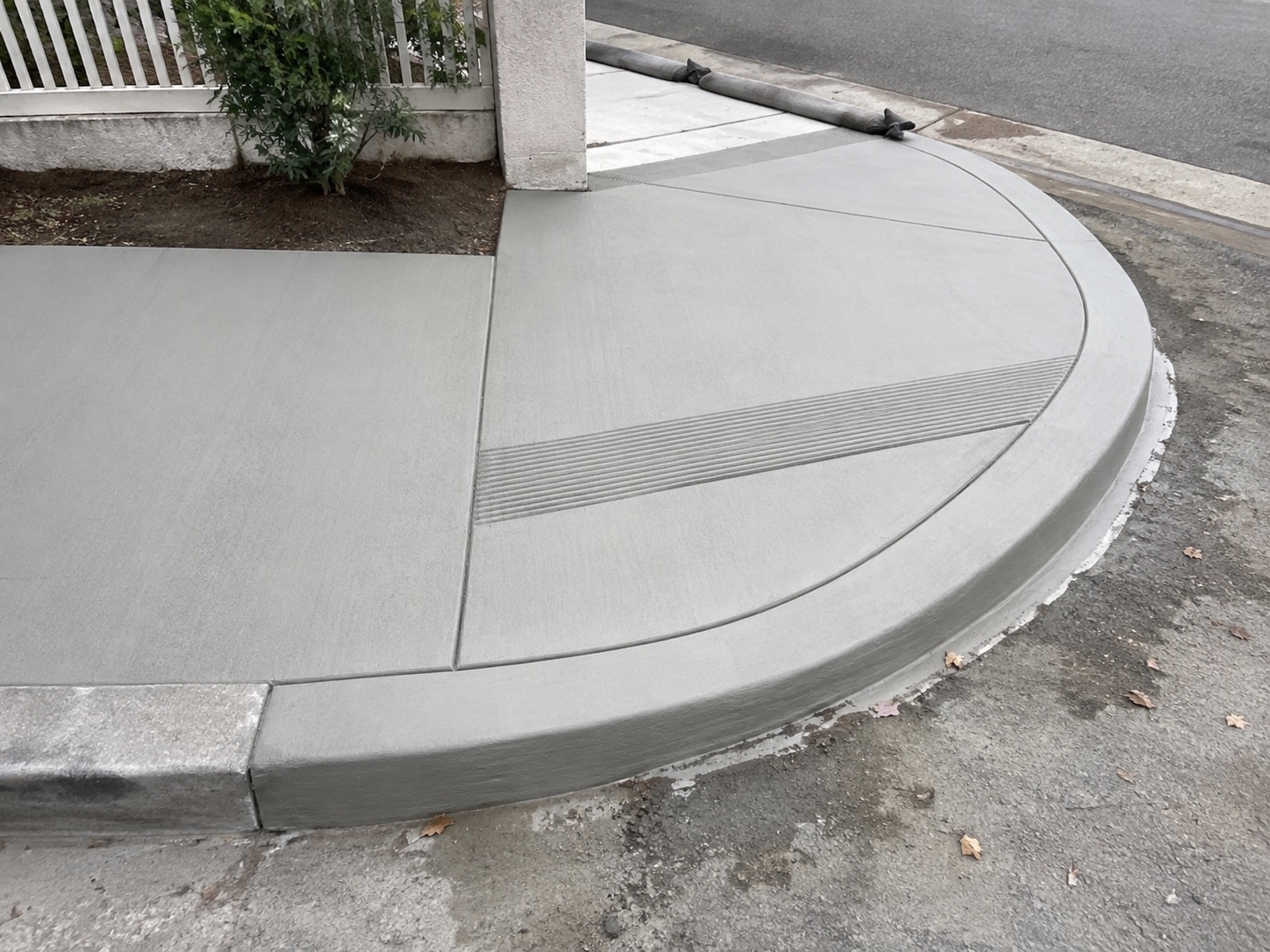
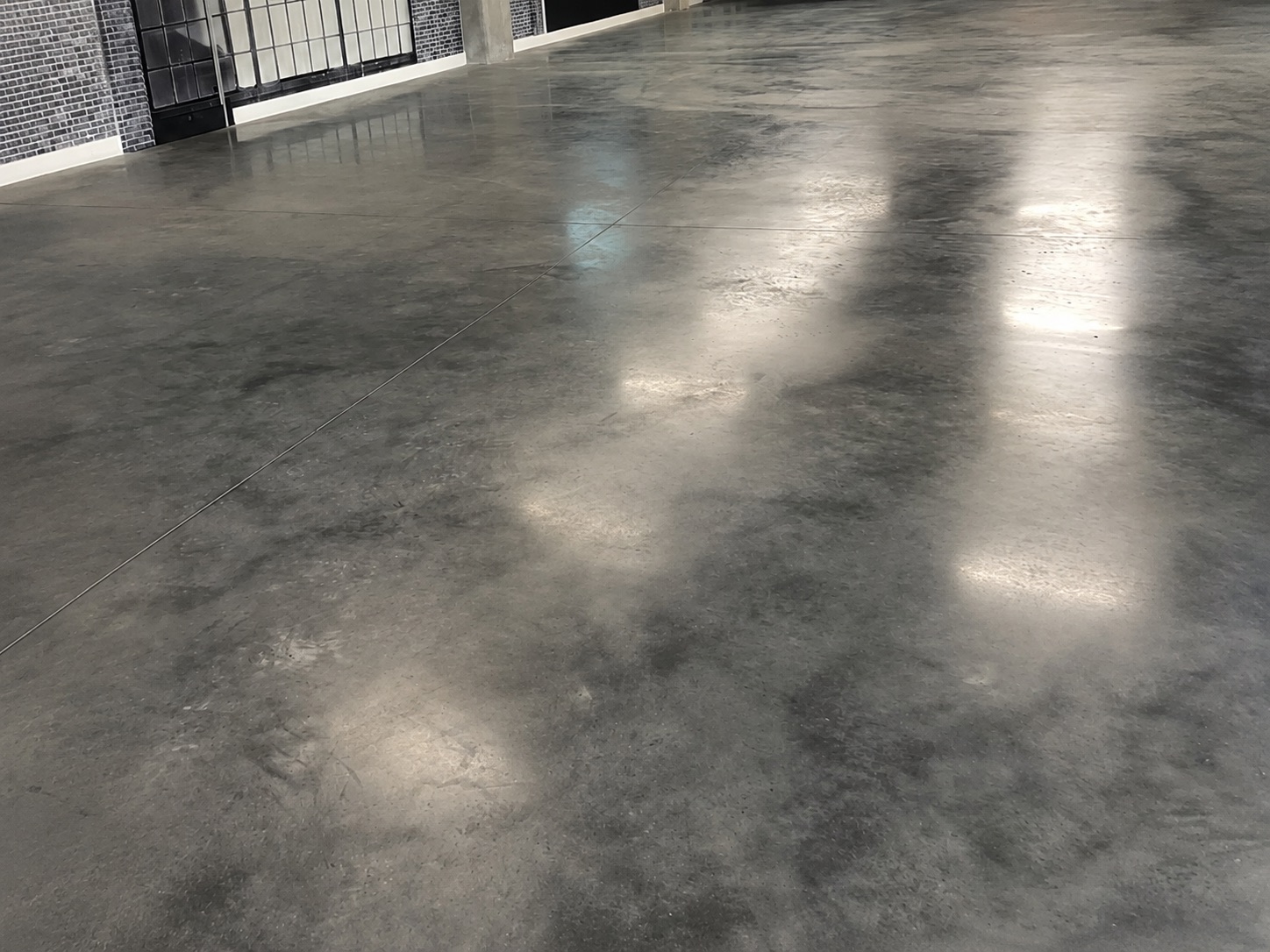
Once the concrete is placed, we finish it to the surface the job calls for: a smooth float-and-trowel finish for interior and garage floors, or a broom finish for traction on exterior pads. We cut control joints at the right spacing while the concrete is still green, giving shrinkage a planned place to crack instead of leaving it to wander across the surface. Then the work shifts to curing: we cure the slab deliberately, keeping it protected as it gains strength toward its full 28-day design strength, because concrete that dries too fast is weaker and far more prone to shrinkage cracking. Finally we seal the surface to guard against moisture and, in our coastal air, salt. Want to know when you can put it to use? Read our guide on how long before driving on new concrete.
Benefits of a Professionally Installed Slab
The reasons to hire a full-time crew for a slab are not abstract. They show up in how the slab performs for the next twenty years.
Enhanced Durability & Longevity
A slab built on a compacted, engineered base, reinforced with properly sized rebar or mesh, and poured at a full 4,000 PSI carries heavy and repeated loads without cracking, spalling, or settling. That is the difference between a garage floor that shrugs off a loaded truck and a shed pad that survives every East Bay season, and a thin pad that crumbles at the edges within a few years. Proper curing and sealing lock in that strength and keep moisture and salt from working the surface loose.
Compliance with Local Building Codes
A slab under an ADU, an addition, or a commercial floor is inspected work, and it has to be. We build to code, pull the required permits, and stage the reinforcement and vapor barrier for inspection before the pour, so your slab is legal, documented, and signed off. That paperwork protects your investment and keeps a future sale or refinance from stalling over unpermitted work.
Minimized Repairs & Maintenance
Most slab failures trace back to a skipped step: no base prep, no reinforcement, no control joints, no cure. Do those steps right the first time and the slab needs almost nothing for years beyond an occasional reseal. Cutting corners up front is the most expensive way to save money on concrete, because tearing out and repouring a failed slab costs far more than pouring it correctly once.
Built for Alameda's Soil & Loads
Slabs in Alameda are not textbook slabs, and pretending otherwise is how flatwork cracks and settles. Much of Alameda Island, the Bay Farm area, and the shoreline flats sit on artificial Bay fill placed over soft Young Bay Mud, ground that can settle over time and even liquefy under seismic shaking. Portions of that fill liquefied during the 1989 Loma Prieta earthquake, so this is not theoretical. We answer that ground with over-excavation and re-compaction of the subgrade, thicker and more heavily reinforced slabs, and a properly compacted Class 2 aggregate subbase, so the slab is engineered for the soil it sits on rather than resting on ground that will move underneath it. Up in the Oakland, Berkeley, and Piedmont hills the problem flips: the ground there is expansive 'adobe' clay that swells when wet and shrinks when it dries, working slabs loose season after season, so we detail those pours to handle that movement.
Seismic reality shapes everything here. The Hayward Fault runs the length of the East Bay, which is one more reason we build well-reinforced, seismic-conscious flatwork as a matter of course. Our cool marine climate does us one favor, almost no freeze-thaw, but the real stressors are coastal salt air and moisture, which we answer with sealing, and hot, windy inland afternoons, which we answer with deliberate curing to limit shrinkage cracking. We also space control joints correctly to manage that shrinkage, giving the slab planned places to relieve stress. Whether your lot is in the flats of 94501, out on Bay Farm in 94502, or up in the hills, we pull City of Alameda permits, or Alameda County Public Works permits for unincorporated areas, and coordinate the inspections. Call (510) 822-7170 to talk through what your site calls for.
Concrete Slab Cost in Alameda & the East Bay
Everyone wants a number, so here are honest ranges, all estimates only. A standard reinforced residential or garage slab generally runs roughly $10 to $16 per square foot in our area, depending on thickness, reinforcement, and how much the site needs to be prepped. A commercial laser-screed slab typically runs roughly $12 to $20 per square foot, moving with the slab thickness, the reinforcement, and the flatness the floor has to hold. Lots on soft Bay fill that need over-excavation and a thicker, more heavily reinforced slab land toward the top of those ranges, while a straightforward pad on stable ground sits lower. Keep in mind that Bay Area labor and permit costs run above national averages, so treat these figures as starting points rather than quotes. Your final flat-rate price comes from a free on-site estimate. If your project involves structural work below the slab, see our concrete foundation pouring page, and for finished interior floors see concrete floor installation. Then call (510) 822-7170 when you are ready.
Why Choose Alameda Elite Concrete Solutions
Local Expertise
We pour slabs across Alameda and the East Bay week in and week out, so we know the soils, the seismic requirements, and the permit and inspection process in each jurisdiction. That local knowledge is the difference between a slab engineered for Bay fill and one that settles because it was treated like ground it is not.
Clear Communication & Flat-Rate Pricing
You get one clear, flat-rate price up front, worked out from a real on-site walkthrough, not a vague hourly guess that balloons on invoice day. We tell you exactly what the slab needs, what it will cost, and when the work happens, and we keep you posted as the concrete cures so you know when the next trade or your own gear can move in. No surprises, no pressure.
Commitment to Quality
We do not cut a slab short by thinning the concrete or skipping the steel. A compacted Class 2 base, a vapor barrier under conditioned slabs, properly sized rebar or mesh, a minimum 4,000 PSI mix, mechanical vibration on the pour, control joints cut on time, and deliberate curing and sealing are standard on every job, no exceptions.
Ready for a slab that stays flat, level, and crack-free for the long haul? Call Alameda Elite Concrete Solutions at (510) 822-7170 for your free on-site estimate and a flat-rate quote, or reach us through our contact page. We serve Alameda and the entire East Bay, including Oakland, Hayward, and San Leandro. If your project reaches below the slab, ask about our concrete foundation pouring, and for a finished interior floor see concrete floor installation. We will walk your site, check the subgrade and access, and give you a straight number, no pressure.
Related Concrete Services in Alameda
Planning more than one concrete project around Alameda or the East Bay? These related services pair naturally with this one:
- Concrete foundation pouring for footings, stem walls, and structural foundations.
- Concrete floor installation for polished, sealed interior concrete floors.
- Concrete repair and resurfacing for crack repair, resurfacing, and slab leveling.
- Concrete driveway installation for new driveways, replacements, and widenings.
Questions, Answered
How much does concrete slab installation cost in Alameda?
As an estimate, a standard reinforced residential or garage slab generally runs roughly $10 to $16 per square foot in our area, while a commercial laser-screed slab typically runs roughly $12 to $20 per square foot, depending on thickness and reinforcement. Lots on soft Bay fill that need over-excavation and a thicker, more heavily reinforced slab cost more than straightforward pads on stable ground. Bay Area labor and permit costs run above national averages, so these are starting points. We confirm your final flat-rate price with a free on-site estimate. Call (510) 822-7170.
Who installs concrete slabs near me?
Alameda Elite Concrete Solutions installs garage slabs, ADU and shed pads, equipment pads, interior floors, and commercial floor slabs throughout Alameda and the East Bay, including Oakland, Hayward, and San Leandro. We are licensed and insured, build on a compacted Class 2 base with rebar or welded wire mesh and a 4,000 PSI mix, and back our work with a guarantee. Call (510) 822-7170 for a free on-site estimate.
How long does concrete slab installation take, and how long is the cure time?
The on-site work, covering excavation and base prep, forming, placing reinforcement and the vapor barrier, and the pour, typically runs from a couple of days to about a week depending on the size of the slab and the site conditions. After the pour, a slab is usually firm enough to walk on within a day and to take light use within about a week, but concrete keeps gaining strength and reaches its full design strength at roughly 28 days, so we cure it deliberately and tell you when it is ready for vehicles or heavy loads. Soft Bay fill lots that need over-excavation add time up front.
What thickness should a concrete slab be?
It depends on the load. A typical residential slab, such as a shed pad or a light patio, is poured at about 4 inches, while a garage floor, driveway apron, or slab that carries vehicles is usually 5 to 6 inches with heavier reinforcement. Commercial floors that take forklifts or racking go thicker still and are engineered to the actual loads. On Alameda's soft Bay fill we often thicken and more heavily reinforce a slab beyond the minimum so it spans weak ground rather than settling into it. We confirm the right thickness during your free on-site estimate.
Do concrete slabs need rebar reinforcement?
Almost always, yes. Reinforcement is what holds a slab together and controls cracking as the concrete shrinks and the ground moves. We size it to the load, using a #4 rebar grid, 6x6 W2.9 welded wire mesh, or both for heavier slabs, all set on chairs so the steel sits within the concrete rather than on the dirt. On our expansive hillside clay and soft shoreline fill, proper reinforcement matters even more, because the ground itself works the slab seasonally. Skipping it to save a little up front is the fastest way to a cracked, failing slab. Call (510) 822-7170.
Ready to get started?
Alameda Elite Concrete Solutions provides fast, same-day concrete across Alameda, CA and the surrounding area — flat-rate pricing, licensed and insured, with 24/7 emergency service. Call now, request a free estimate or head back to our homepage.