
Seal Your Concrete Before the Bay Area Rains: A September Checklist
If you own concrete in the East Bay, September is your make-or-break month. The warm, dry stretch we get through September and into early October is the last dependable window to clean, seal, and cure a slab before the October to April rainy season sets in. Sealer needs dry concrete and mild temperatures to bond and cure the way it should, and once the first real storms roll through the Alameda flats and the Oakland hills, that window slams shut for the better part of half a year.
At Alameda Elite Concrete Solutions we spend late summer walking driveways, patios, and walkways with homeowners who want their concrete buttoned up before the wet season. This is a plain-English checklist for doing exactly that. If you would rather have a set of experienced eyes on it, call (510) 822-7170 for a free on-site look.
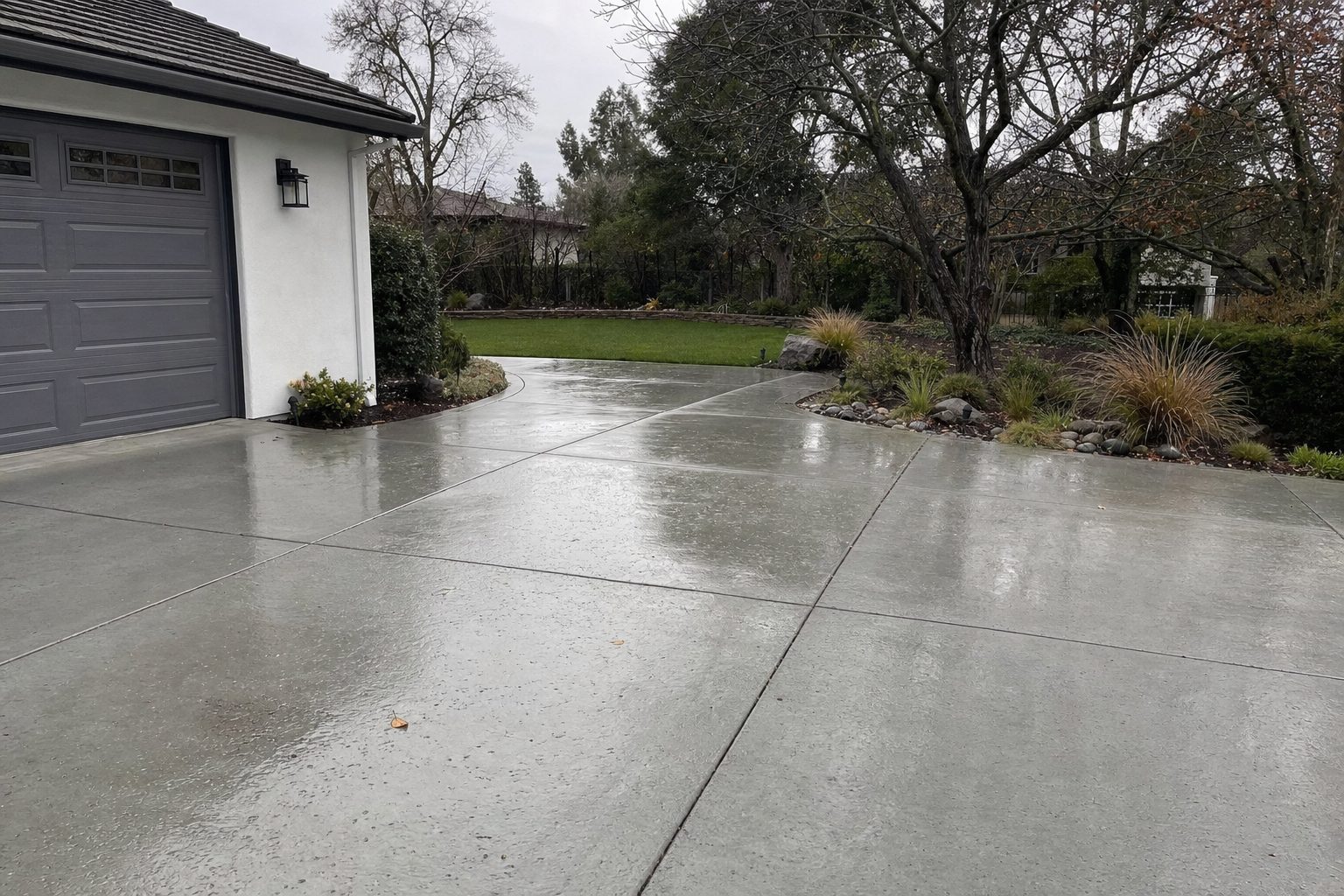
Why September Is the Window in the Bay Area
The Bay Area gets almost all of its rain in a tight October-to-April band and stays bone dry the rest of the year. That is the opposite of most of the country, where the enemy is winter freeze-thaw. We do not get freeze-thaw here in any meaningful way. Our concrete lives and dies by water and drainage instead.
Sealer chemistry cares about two things: a dry surface and moderate temperatures. September gives you both. Daytime highs are friendly, the marine layer burns off, and the slab has had all summer to dry out from the inside. Try to seal in December and you are fighting damp concrete, cold nights, and a forecast that will not give you the 24 to 48 hours of dry weather a fresh coat needs to set. Miss September and you are usually waiting until spring, which means a whole rainy season of the slab drinking up water it did not have to. Not sure where to start? A quick call to (510) 822-7170 gets you a free walkthrough.
Planning a concrete project in Alameda or the East Bay? Get a free, no-obligation on-site estimate and a written flat-rate price.
What Sealing Actually Protects Against Here
Sealing is not cosmetic fussing. On the East Bay it is the cheapest insurance you can buy against the two failure modes that wreck local concrete. Water is the common thread in both.
Up in the Berkeley, Oakland, and Piedmont hills the soil is expansive adobe clay. It swells when it gets wet and shrinks when it dries. When rain runs into an open crack or a bad joint and soaks the clay underneath a slab, that ground heaves, and the concrete rides up and cracks further. Down on the flats and along the shoreline, from Alameda Island through Emeryville and the San Leandro and San Lorenzo bayfront, you are sitting on bay fill and young bay mud that settles over time. Water intrusion accelerates that settlement and undermines the sub-base a slab is supposed to rest on evenly.
A good sealer keeps surface water from wicking into the concrete and, just as important, keeps it out of the cracks and joints that feed water down to the soil. It also fights the coastal salt air and moisture that slowly break down an unsealed surface. If you want the deeper story on our soils and why slabs fail here, we wrote it up in why concrete cracks in the East Bay.
The September Pre-Rain Checklist
Here is the walk to do this month, in order. It takes an afternoon and tells you whether you are sealing now or repairing first.
Start by inspecting. Walk the whole slab in good light and look for cracks, spalling where the top layer is flaking off, popped control joints, and low spots. Run a key or screwdriver along any crack; if it is wider than a credit card or the edges are crumbling, flag it. Check where the driveway meets the garage and where walkways meet the house, since those seams are where water loves to sneak in.
Next, clean. Sealer will not bond to a dirty slab. Pressure wash off the oil, moss, mildew, and the summer dust, then let it dry fully, usually a day or two of sun. Then reseal the driveways, patios, and walkways that are in sound shape. Do this before the rain, not after, because the surface has to be dry for the coating to take. While you are at it, check drainage and pooling by watching where water sits after you rinse, and note any spot where it runs toward the house instead of away. Finally, fix trip hazards, the lifted edges and settled joints that become slick, dangerous, and litigation-worthy once they are wet. If a section is beyond a simple patch, that is a repair conversation, and you can reach us at (510) 822-7170.
Seal Now or Repair First: How to Tell
This is the call most homeowners get wrong, and it matters, because sealing over a failing slab just locks in the problem. The rule of thumb is simple. Sealing is for concrete that is fundamentally sound and only needs protection. Repair comes first when the concrete has already started to fail.
If your slab has tight hairline cracks, some surface staining, and a slightly worn look but sits flat and solid, you are a sealing candidate, and September is your month. If you are seeing cracks you can fit a coin into, sections that have heaved or settled so pieces sit at different heights, spalling that exposes the aggregate, or joints that have opened up, seal is the wrong first move. Those need patching, crack repair, or resurfacing before any coating goes down. Sealing traps the issue and the next wet season will make it worse.
Not sure which camp you are in? Our field guide on the signs you need concrete repair lays out what to look for, and our concrete repair and resurfacing crew can resurface a tired driveway or patio so it is ready to seal and ready for the rain.
Drainage: Keeping Water Off Your Slabs and Foundation
Sealer handles the surface, but drainage handles the ground, and around here the ground is where the money problems start. The single best thing you can do before the rains is make sure water moves away from your concrete and your foundation instead of pooling against them.
Walk your property with a hose or wait for the first light rain and watch. Concrete should carry water away from the house, not toward it. Look for slabs that have settled and now tilt back toward the foundation, downspouts that dump right onto a patio or against a footing, and clogged area drains. On the clay-heavy hill lots, ponding water is what wakes up the expansive soil and heaves your slab. On the bay-fill flats, water sitting against a foundation feeds the long, slow settlement those neighborhoods are known for. Clear your drains, extend your downspouts past the slab, and note any concrete that has lost its slope. Regrading or a small trench drain now is far cheaper than chasing foundation movement later. When we come out to seal, we flag the drainage issues too, because a perfect coating over a slab that ponds water is only half a fix.
What a Pro Seal or Repair Visit Covers
When we come out, the visit is free and there is no pressure. We walk the concrete with you, tell you honestly whether you are looking at a straightforward seal or a repair-then-seal, and give you a clear flat-rate quote so there are no surprises later. Bay Area labor and permit costs run above national averages, so we would rather you know the real number up front than guess off a chart.
For a straightforward job, a professional seal means the right product for your surface, proper prep and cleaning, and application timed to the weather so it actually cures. As a rough planning figure, resealing an existing driveway or patio often lands in the ballpark of $1.50 to $4 per square foot depending on the surface and prep, while resurfacing a worn slab runs higher. Those are estimate ranges only, and the honest number always comes from the on-site look. If the slab needs work first, we will scope the crack repair, patching, or resurfacing so your concrete driveway or concrete patio is genuinely ready before the first storm. We are licensed, insured, and local, and we work clean and on schedule. Book a visit at (510) 822-7170 or through our contact page.
Beat the Rain: Book Your September Walkthrough
The rains are coming whether your concrete is ready or not. A slab that goes into the wet season sealed, draining right, and free of open cracks will come out the other side in spring looking the same as it does today. One that does not will show you exactly where the water got in. September is the window, and it does not stay open long. Call Alameda Elite Concrete Solutions at (510) 822-7170 or reach us through the contact page for a free on-site estimate anywhere in Alameda and the East Bay.
Questions, Answered
How often should you reseal concrete in the East Bay?
For most driveways, patios, and walkways here, resealing every two to three years keeps the surface protected. High-traffic areas, exposed shoreline lots that take a lot of salt air, and decorative or stamped surfaces may want it closer to every couple of years. An easy test: splash water on the slab. If it soaks in and darkens instead of beading up, the old sealer has worn off and it is time.
Can you seal concrete right before or during the rainy season?
Right before, yes, and that is exactly the point of a September seal, as long as you have a dry stretch. Sealer needs the surface dry and usually 24 to 48 hours of dry, mild weather to cure. During the rainy season it gets hard to hit that window, and sealing damp concrete or getting rained on before it cures ruins the coat. If the forecast is clear for a couple of days, you are fine. If storms are lined up, wait.
Does sealing stop concrete from cracking?
Not by itself. Sealing greatly reduces water getting into the concrete and down into the soil, which is a major driver of cracking in our expansive clay and bay-fill soils, so it helps prevent the water-related cracks. It will not stop cracking caused by a bad sub-base, missing reinforcement, poor control joints, or ground movement. Sealing is protection, not a structural fix. If a slab is already failing, it needs repair first.
What is the best time of year to seal concrete in the Bay Area?
Late summer into early fall, roughly September through the first part of October. The concrete has dried out over the summer, temperatures are mild, and you get the reliable dry weather sealer needs to cure right before the October to April rains arrive. Spring can work too once the ground dries out, but fall is ideal because it protects the slab going into the wettest months.
Should I DIY seal my concrete or hire a pro?
A small, sound patio in good shape is a reasonable DIY job if you prep and clean it properly and pick the right product. The trouble is that most slabs also have drainage issues, worn joints, or early cracking that a coat of sealer will hide rather than fix, and sealing over those locks the problem in. A pro visit is free, catches those issues, and matches the product and timing to your surface. If in doubt, get the walkthrough first.
Need Help in Alameda?
Alameda Elite Concrete Solutions provides fast, same-day concrete across Alameda, CA and the surrounding area — flat-rate pricing, licensed and insured, with 24/7 emergency service. Landed on this article from a search? Head back to our homepage to see everything we do, or reach out now.