
Concrete vs. Asphalt Driveway: Which Is Better for Your East Bay Home?
Short version, for the large majority of East Bay homes, concrete is the better driveway. It lasts 30 to 40 years or more, holds firm through our hot inland summers, and opens the door to decorative finishes that lift both curb appeal and resale value. Asphalt has one real edge, a lower upfront price, and it flexes a little better in hard-freeze climates that the Bay Area simply does not have. So if you plan to stay put and want a surface you install once and mostly forget, concrete is usually the smarter spend.
That is the fast answer. Below we put the two materials head to head on the seven things that actually decide it, with honest 2026 Bay Area cost ranges. Want a firm number for your driveway instead of a range? Call (510) 822-7170 or read more about our concrete driveway installation service.
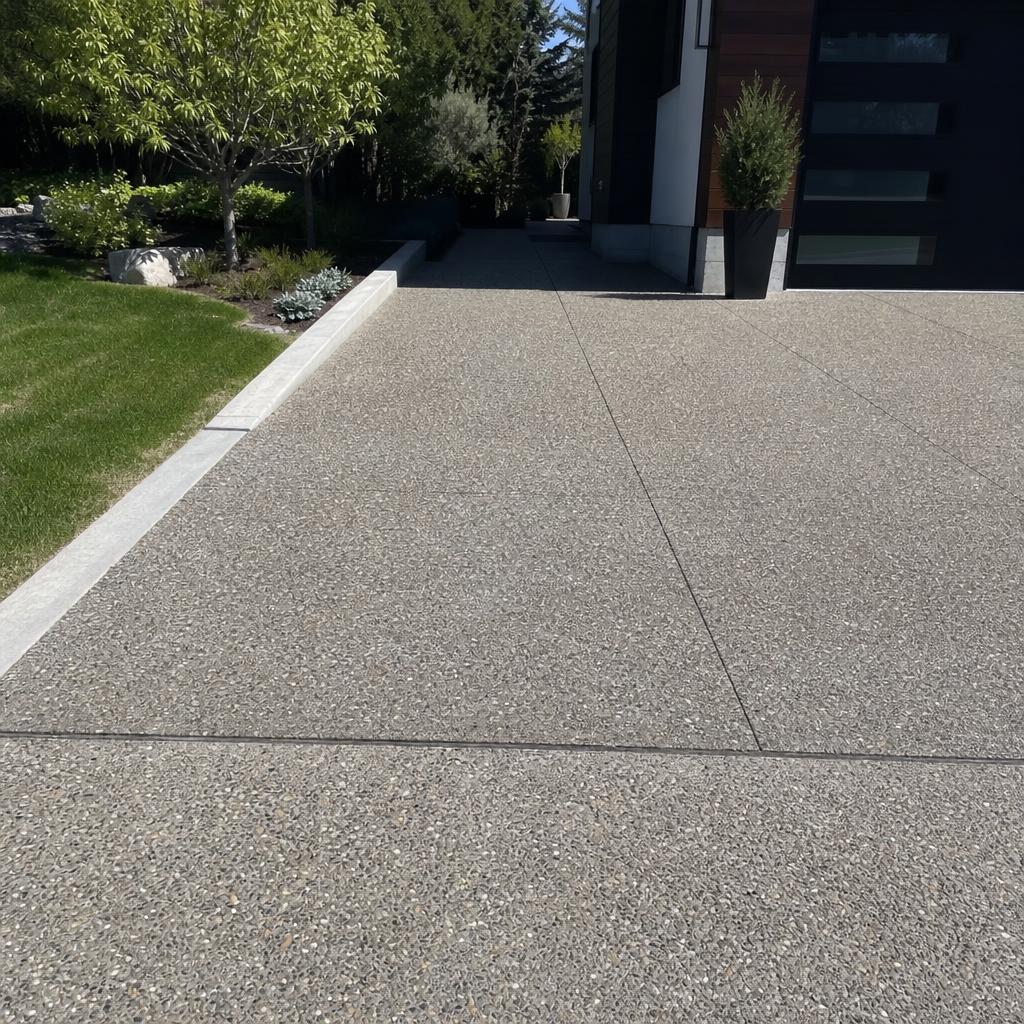
Concrete vs. Asphalt Driveway: Quick Comparison
Here is how the two materials stack up on the factors East Bay homeowners ask about most. Every figure below is a 2026 estimate to help you plan, not a quote.
| Factor | Concrete | Asphalt |
|---|---|---|
| Upfront cost | $14–$24 per sq ft installed | Lower, roughly $7–$13 per sq ft |
| Lifespan | 30–40+ years | 15–20 years |
| Maintenance | Optional sealing every few years | Sealcoat every 3–5 years |
| Heat performance | Stays firm in summer heat | Softens above ~90°F, gets tacky |
| Curb appeal / finishes | Stamped, exposed aggregate, colored | Black only |
| Repairs | Patchable; color match harder | Easy to patch and blend |
| Resale | Adds more value | Modest value |
The rest of this guide walks through each row so you can see why the two materials trade places depending on what you care about most. For a flat-rate price on your lot, call (510) 822-7170.
Planning a concrete project in Alameda or the East Bay? Get a free, no-obligation on-site estimate and a written flat-rate price.
Upfront Cost: Asphalt Wins Here
Asphalt is the cheaper driveway to install, full stop. Expect roughly $7 to $13 per square foot for asphalt in the Bay Area versus about $14 to $24 per square foot for concrete. On a standard two-car driveway, that gap is real money, and a concrete driveway commonly lands between $9,000 and $18,000 installed here once you factor in our above-average labor and permit costs.
Asphalt is also faster to lay. A crew can put it down in a day or two, and you can usually drive on it within a couple of days, while concrete needs about a week to cure before heavy use. If your only priority is the lowest possible price this year, asphalt is the honest answer. Just remember that upfront cost is one line in a much longer ledger, and the rest of this comparison is where concrete earns its keep.
Lifespan: Concrete Lasts Roughly Twice as Long
This is the number that flips the math. A properly built concrete driveway lasts 30 to 40 years or more in our climate. Asphalt typically gives you 15 to 20 years before it needs replacing. So over the life of your home, you may pour asphalt twice, or more, for every one concrete driveway you install.
The East Bay actually treats concrete gently. We have negligible freeze-thaw, the cycle that cracks concrete in colder states, so a driveway built on a compacted sub-base with a 4,000 PSI mix, rebar, and fiber mesh can easily outlast its owner. Spread that upfront price across 35 years instead of 18, and concrete often costs less per year than asphalt even though it costs more on day one. For a full local breakdown, see our concrete driveway cost guide.
Maintenance: Concrete Asks Less of You
Asphalt needs regular attention. To keep it from drying out, cracking, and unraveling at the edges, you should sealcoat it every three to five years. That is an ongoing cost and chore for the entire life of the driveway.
Concrete is close to set-and-forget. Sealing every few years is smart in the East Bay, especially near the shoreline where salt air and moisture are the main stressors, but it is protective rather than mandatory, and the intervals are longer. Keep the control joints clear, rinse off stains, and address any small crack early, and a concrete driveway mostly takes care of itself. Fewer weekends spent with a sealer bucket is worth something.
Heat Performance: Why Bay Area Sun Favors Concrete
This is the local hook most cost calculators miss. Asphalt is a petroleum product, and it softens as it heats. On hot inland East Bay afternoons, once temperatures climb above about 90 degrees, an asphalt driveway can get tacky, scuff under tires, and even hold the imprint of a kickstand or a heavy trailer jack. Neighborhoods inland from the bay, think Castro Valley and Hayward, see plenty of those days each summer.
Concrete does not care. It stays firm and dimensionally stable through the hottest stretch of the year, and its lighter color reflects sun instead of soaking it up, so it runs cooler underfoot too. Asphalt genuinely flexes better in hard-freeze, heavy-snow climates, but the Bay Area's mild, hot-summer weather plays right to concrete's strengths.
Curb Appeal and Finishes: Concrete's Big Advantage
Asphalt comes in one color, black, and one look. Concrete is a blank canvas. You can leave it a clean broom finish, or step up to decorative options that make a driveway look like a design feature instead of a slab. Popular East Bay choices include stamped concrete that mimics stone, slate, or brick, exposed aggregate for a natural pebbled texture with excellent grip, and integral colored concrete that runs the tone all the way through the pour.
That design range matters at the curb. A stamped or colored driveway reads as a deliberate upgrade to buyers and neighbors, while asphalt reads as purely functional. If the front of your home is part of why you love it, concrete gives you far more to work with. Call (510) 822-7170 to see finish samples in your own light.
Repairs: A Point for Each
Asphalt is genuinely easier to patch. Because it is a uniform black surface, fresh patches blend in reasonably well, and cracks can be filled and sealed without much fuss. That forgiving quality is one of asphalt's real strengths.
Concrete repairs are also very doable, a cracked or spalled section can be patched or resurfaced, but matching color and texture perfectly on a decorative surface takes more skill. The upside is that concrete simply needs repair far less often. You trade asphalt's frequent, easy fixes for concrete's occasional, more careful ones. On our expansive clay and Bay fill soils, both materials depend on the same thing to avoid trouble, a properly compacted, well-drained base underneath.
Resale Value: Concrete Helps More
A driveway is one of the first things a buyer sees, and concrete tends to add more perceived value than asphalt. It signals durability and low maintenance, and a decorative concrete driveway in particular can lift a home's curb appeal in a way that shows up in offers. Buyers also know they are inheriting a surface with decades of life left, not one due for replacement in a few years.
Asphalt does not hurt resale, but it rarely stands out. In East Bay neighborhoods where homes are well kept and buyers are discerning, the longer-lasting, better-looking option is the one that tends to pay you back when you sell.
The Verdict for Most East Bay Homes
Add it up and the recommendation is straightforward. Asphalt is the right call if your top priority is the lowest upfront cost, you need the driveway usable within days, or you live in a hard-freeze climate. For almost everyone else in the East Bay, concrete wins where it counts, longevity, heat performance, curb appeal, and resale, and our mild, hot-summer climate is close to ideal for it.
The one place to never cut corners, whichever material you choose, is the base. On the East Bay's Bay fill and expansive clay, a compacted sub-base, proper reinforcement, and good drainage are what make any driveway last. Our concrete driveway installation page covers exactly how we build them to hold up on local soil.
Ready for a firm, flat-rate quote on your driveway? Reach Alameda Elite Concrete Solutions through our contact page or call (510) 822-7170, Monday through Sunday, 7am to 6pm.
Questions, Answered
Is concrete or asphalt better for a Bay Area driveway?
For most East Bay homes, concrete. It lasts 30 to 40 years versus 15 to 20 for asphalt, stays firm through hot inland summers instead of softening, needs less maintenance, and offers decorative finishes that boost curb appeal and resale. Asphalt wins mainly on lower upfront cost. Our mild, freeze-free climate favors concrete.
Is asphalt or concrete cheaper for a driveway?
Asphalt is cheaper to install, roughly $7 to $13 per square foot versus about $14 to $24 for concrete in the Bay Area, and a two-car concrete driveway commonly runs $9,000 to $18,000. But concrete lasts about twice as long, so its cost per year is often lower. Both figures are estimates confirmed by an on-site quote.
Does an asphalt driveway really soften in the heat?
Yes. Asphalt is a petroleum-based material that softens as it warms, and on inland East Bay days above about 90 degrees it can get tacky, scuff under tires, and hold imprints from kickstands or trailer jacks. Concrete stays firm and stable in the same heat, which is a big reason it suits our hot-summer climate.
Need Help in Alameda?
Alameda Elite Concrete Solutions provides fast, same-day concrete across Alameda, CA and the surrounding area — flat-rate pricing, licensed and insured, with 24/7 emergency service. Landed on this article from a search? Head back to our homepage to see everything we do, or reach out now.