
Concrete & Driveway Permits in Alameda County (2026)
Permitting is the part of a concrete project most homeowners dread — and the part scam contractors love to skip. But a permit isn't red tape for its own sake: it means your work is inspected, documented, and won't come back to bite you when you sell. In Alameda County, who issues that permit depends entirely on where you live, and the rules aren't obvious.
This guide explains when a permit is required, how city and county permitting differ, and the Alameda driveway rule that surprises a lot of homeowners. The short version: we handle all of it for you. To get started, reach us through our contact page or call (510) 822-7170.
When Do You Need a Concrete Permit?
Whether a permit is required depends on the type and scope of work and your jurisdiction, but here are the common triggers in the East Bay:
- New or replaced driveways. Structural flatwork that vehicles drive on, changes to the curb cut, or work affecting street drainage typically needs a permit.
- Work in the public right-of-way. Sidewalks, curbs, and gutters often require an encroachment permit because they sit on city or county land.
- Structural concrete. Foundations and structural slabs are permitted and inspected.
- Grading and slope work. Moving significant earth, or building on a hillside, usually triggers a grading permit.
Smaller, purely cosmetic work on private property — like resurfacing an existing patio — may not need a permit. Because the thresholds vary by city, the safest move is to have your contractor confirm before breaking ground. We do that check on every job. Questions about your project? Call (510) 822-7170.
Planning a concrete project in Alameda or the East Bay? Get a free, no-obligation on-site estimate and a written flat-rate price.
City vs. County: Who Issues Your Permit
This is the part that trips people up. Alameda County contains both incorporated cities, which run their own building departments, and unincorporated areas, which are served directly by the county. Where you live decides which office issues your permit.
| Your Location | Permitting Authority |
|---|---|
| Alameda | City of Alameda building department |
| Oakland | City of Oakland building department |
| Berkeley | City of Berkeley building department |
| Hayward | City of Hayward building department |
| San Leandro | City of San Leandro building department |
| Castro Valley (unincorporated) | Alameda County Public Works |
| San Lorenzo (unincorporated) | Alameda County Public Works |
So a driveway in Oakland is permitted by the City of Oakland, while the same driveway a few miles away in Castro Valley goes through Alameda County Public Works. Piedmont, Emeryville, and Albany each run their own building departments too. Getting this right the first time avoids delays — and it's exactly the kind of local detail we track for you.
Alameda's Driveway Concrete Permit Rule
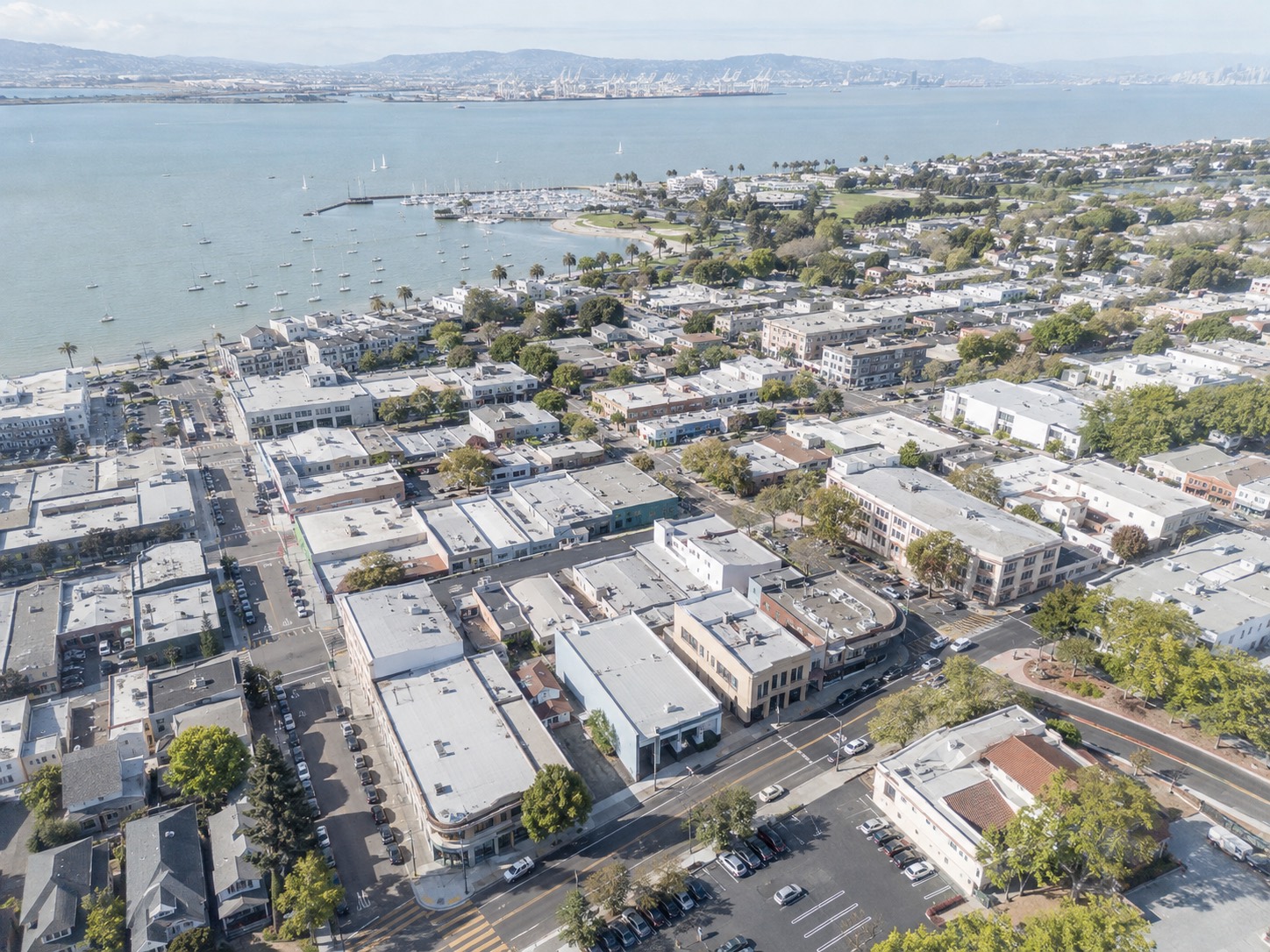
One rule worth calling out specifically: in the City of Alameda, a concrete permit is required for a new or removed driveway. If you're pouring a fresh driveway or tearing out an old one, that permit is part of the process.
It's easy to see why the rule exists. Alameda Island sits largely on Bay fill, and driveway work can affect grading, drainage, and the public right-of-way at the curb. Permitting ensures the work is done to standard and inspected — which protects you and your neighbors, and keeps your project clean at resale. A contractor who tells you to skip it is doing you no favors.
If your driveway work touches the sidewalk or curb cut, an encroachment permit for the public right-of-way may come into play on top of the concrete permit. We sort out exactly which approvals your specific driveway needs before we break ground, so nothing stalls mid-project.
What Happens If You Skip the Permit
It's tempting to skip permitting to save time or money, and some contractors will encourage it. Don't. Unpermitted concrete work creates real problems that surface at the worst moments:
- Resale headaches. Unpermitted work shows up during a sale. Buyers and their agents flag it, and you may be forced to retroactively permit — or even remove and redo — the work under pressure to close.
- Stop-work orders and fines. If the city or county notices unpermitted work in progress, they can halt the job and levy penalties, which cost far more than the original permit.
- No inspection safety net. Inspections exist to catch problems. Skip them and you have no independent confirmation the work meets standard — a real risk on our shifting soils.
- Insurance and liability gaps. Unpermitted work can complicate insurance claims if something goes wrong.
A permit is a small, one-time cost that protects a permanent investment. It's always worth doing right.
Grading Permits for Hillside and Slope Work
If your project involves a hillside lot — common in the Oakland, Berkeley, and Piedmont hills — there's an extra layer. Moving earth, cutting into a slope, or building on a grade typically requires a grading permit in addition to the concrete permit. Grading rules exist to manage erosion, drainage, and slope stability, all of which matter enormously in expansive-clay hill country where the ground moves seasonally.
Grading work also affects how we engineer the concrete itself: proper drainage, retaining where needed, a compacted sub-base, and reinforcement all become more important on a slope. It's one more reason to work with a contractor who knows East Bay hillsides, not just how to pour flatwork on a level lot.
How Alameda Elite Concrete Solutions Handles Permitting for You
Here's the simplest part of this whole guide: with Alameda Elite Concrete Solutions, permitting is our job, not yours. On every project we:
- Determine what's required. We identify whether your work needs a concrete permit, an encroachment permit, a grading permit, or a combination — based on your specific address and scope.
- Identify the right authority. Whether that's your city building department or Alameda County Public Works, we know which office handles your location.
- Pull the permits. We submit the paperwork and manage the process so you don't have to navigate the counter yourself.
- Build to code and pass inspection. We pour to standard — compacted sub-base, 4,000 PSI mix, rebar and fiber mesh, proper control joints and drainage — so inspections go smoothly.
All of it is folded into your written flat-rate proposal, so there are no surprise permit fees. You get a fully permitted, inspected, and documented job — the kind that holds up and never causes trouble down the road. Ready to start? Visit our contact page or call (510) 822-7170, Monday through Sunday, 7am to 6pm.
Questions, Answered
Do I need a permit to pour a driveway in Alameda?
Yes. The City of Alameda requires a concrete permit for a new or removed driveway. Driveway work can also involve an encroachment permit if it affects the curb, sidewalk, or street drainage. We determine exactly what your project needs and pull the permits for you as part of the job.
Who issues concrete permits in unincorporated Alameda County?
Unincorporated communities like Castro Valley and San Lorenzo permit through Alameda County Public Works rather than a city building department. Incorporated cities such as Oakland, Berkeley, Hayward, and San Leandro run their own building departments. We identify the correct authority for your address and handle the submission.
Do I need a grading permit for concrete work on a hillside?
Often, yes. Hillside and slope projects in areas like the Oakland, Berkeley, and Piedmont hills usually require a grading permit in addition to the concrete permit, because moving earth affects erosion, drainage, and slope stability. We assess whether grading applies and manage the permitting for you.
Does Alameda Elite Concrete Solutions handle the permit paperwork?
Yes. Permit management is included in our service. We determine what's required, identify whether your city or Alameda County Public Works is the issuing authority, submit the paperwork, and build to code so inspections pass. All permit costs are folded into your written flat-rate proposal with no surprises.
Need Help in Alameda?
Alameda Elite Concrete Solutions provides fast, same-day concrete across Alameda, CA and the surrounding area — flat-rate pricing, licensed and insured, with 24/7 emergency service. Landed on this article from a search? Head back to our homepage to see everything we do, or reach out now.